The synth store is at the back of a warren of hallways in a former industrial building on the Brooklyn side of the East River. The building is vast and now given to artists’ studios, tattoo parlors, and various forms of yoga, screenprinting, and other forms of middlebrow health and craft. There are many of these culture factories around the city, liminal spaces between art and commerce, always in former warehouses where, I don't know, horse skulls were rendered, or footmen's boots were cobbled, or baby’s bottles were impregnated with healthful plutonium, or radios were manufactured. There is something in America that yearns to reconstitute an intentional community—to assemble artisans, and celebrate craft, like it was Roycroft in 1905. We love to re-imagine utopian commerce within the ghosts of local industry. Anyway it's one of those. I love it.
I went not to buy anything exciting but rather simple, maintenance objects: A black metal modular case that is essentially an expensive surge protector, some power cords, and some patch cables. I was, alas, buying stuff for my stuff. That is the hobbyist's curse.
It is a well-regarded store if you are a particular kind of nerd, and it is the subject of many appreciative Reddit threads. It moved deep into this warren after the rent got too high in Williamsburg. I go there every couple of months. The next day would be given to snow removal for myself and various older neighbors; my spouse commits me and they thank her for it. I don't mind. We have a snowblower. But today, before—a little trip for Old Dad.
I always feel slight anxiety on entering. I'm a little seasoned for the hobby. I'm not a musician. I don't have talent. A fraud alert goes off when I get too close to the knobs and sliders.
But I just love the gear, and learning music theory, and learning little Bach pieces, and spending hours with the very same note droning in my ears. My therapist says I like modular synths because I’m atomized and it’s a way to put myself together. I don’t know. I want that long slow waveform with a little vibrato, a little reverb. Most music has too many notes. The best music, the music I make, has one note that plays until I get angry at it, often a half hour. One day I'll explain how many hours I've spent in Surge XT, looking for that one tone. I’m embarrassed by this. Others are embarrassed for me.
When I walk in I see a $32,000 analog synth the size of a washer-dryer newly arrived. I admire it. I turn one knob then turn it back. I am spoiled but I have limits.
The shopkeepers, they're nice, especially these two, who seem to kind of...be the store. They know literally everything about the field: Every manufacturer, every method, levels of detail unimaginable to me. They tell me about a new module maker in Gowanus, contrasting digital processing to analog. I try to keep up and chitter away but I know I don’t have the details right. Never stopped me from talking before.
One of them goes over towards the 0-C0AST, a paperback-book sized device that is the antithesis of a computer—display-less, electric, glowing, studded with knobs, and patch wires coming out of multiple sockets, entering other sockets to change the flow of signal. But ultimately it can make only a very narrow range of sounds.
“I should sell you mine,” I say. “I could bring it in. It's just sitting at home.”
Hearing this, he proceeds to patch it, tune it, pointing it to itself—no external sources. Boops emerge.
I bought mine...well I don't remember where. Craigslist, maybe—somewhere in Brooklyn? Some Saturday morning, a bleary-eyed dude coming down to take $350 off of me? Used for sure. At the moment it was exciting but now it is a thing I own.
This person doesn't say much as they patch and adjust. They just keep turning knobs. I am—uncertain, wanting to spend money, one foot always out the door. I didn't expect an impromptu concert.
But then I am entranced. A minute, another minute. A million tiny little tones. Three or four wires crossing each other. “You can feed the square into the overtone like this. Take a picture,” he says, “then you can reproduce this at home.”
I take a video and I realize, watching it later, that I'm talking, not listening. It's not an LFO, as I offer; it's a function generator and the difference is subtle, until you decide it isn’t. The larger issue is, Can I shut up? And the answer, I think, is No. But I can try.
I realize haven't understood this synthesizer at all. It's absolutely full of ideas, of West Coast and East Coast ideologies of synthesis; it's filterless, but has all kinds of different ways to achieve tonalities, and while before I've found it kind of noodly, that's because I'm noodly and uninformed; in the hands of someone who knows what overtone and multiply mean—not just what they do, but what they mean—it becomes an extension of their thoughts, a living thing. Each note gets imbued with subnotes, wrapped in envelopes of various angles, just a few things feeding into each other and making as much sound as one might ever need. I watch him work on it, with gentle awareness, treating it not as a gadget or toy, or as a password to a secret club, but as an instrument.
It might not sound amazing to you—you'd need to have struggled with this tiny instrument to know that you were hearing something to special—but to me it sounds guttural, textural, full of ideas. Now this is not some miracle. It's knowledge and patience, and I lack both.
I keep thinking I should offer some fact, some data they can use, but I'm helpless, and then I remember that's the point: I'm a hobbyist, visitor, customer. That's my role.
I took a synth class a few months ago at the School of Visual Arts. A night class. It was the best thing. The teacher seemed to be in his 20s. He taught us to solder and program microcontrollers that could then be played like instruments. I didn't get to know my fellow students, except to nod at them. I just sat in a place surrounded by machines for making things. It was wonderful.
I'd been a teacher in the graduate school in the same building not long ago. It was hard and I never felt good at it. But here I was a student, and my solder joints were...not good. I needed help, and received it, and felt happy.
I realized that I’d approached teaching wrong. I felt beholden to the students. I wanted them to get what was in my brain. I felt on the hook. But instead I should have just created a space where it was interesting to learn and talked about things in a very paced, orderly way.
You get used to being the teacher, the source of information, the provider. Not so much arrogance but habit. I tell things to my teens. I exchange information over coffee. I parse signal and translate it. Most of my friends, we have two conversations at once, talking right over each other.
At work I boss and thought lead and grumble. My midlife crisis takes the form of being an amateur wherever I can—a student, a patient, forced into humility by the tasks at hand. My piano lesson is exactly one lesson, repeated over week:
Go.
Slow.
So I left the store into the cold. They sold me a synth I already had. What a gift! They also gave me a stack of ICE OUT posters to distribute.
I've spent hours trying to patch. Using the same wires. I can't quite get the sound in the video, in the store. It's not that it's not acoustically the same, it's that I don't understand. I can’t get from one sound to another. My hands don't get it, my ears don't get it, and I don't understand the signal flow. So I have to go slow, slow, slow. In an age of panic. As the world warms. As the culture melts and robots grow voices.
As I type this I have a Make Noise 0-C0AST playing a modified Krell patch. For an hour. Little tweaks. I know so much more than I did two days ago. And very little. The sound is undistinguished—but also...mine. No one else can hear what I hear. It's not actually very good. But it is mine. Spiritual people will say: There are teachers everywhere! You just need to open your sclerotic hearts! I’m pretty basic so I just end up buying synths, or hiring a piano teacher. I think it works out about the same.

I am a passive verb. I operate in language and business and descriptions of future state; basically my brain is entirely for describing. I find action confusing. This part of myself is not always under my control. So I gravitate to actors.
My spouse acts. She takes news hard. She does more every day, is a node in a network of people who act to make things better. She invites, cooks, assembles, 3D-prints, coordinates. She brings 20 people around the table to make things that will be given away, and since the table can't hold that many people, sets up another table right next to it.
This leads to some funny processes; one night I host an event about AI and marketing at work—the opposite of an activist occurrence. I moderate. But the caterer is out of slider buns so sends us 100 full-sized hamburgers, leaving 80 because no one wants whole snack burgers before dinner. And trays of assorted apps and crudités. We mingle for hours. I close up the office—I like being last to leave—and pile up all the remaining trays and bring it all home on the Q train in Fresh Direct bags (the Birkin of New York City mutual aid).
There are waiting clean, new plastic trays by the hundreds. We'll also recycle the aluminum trays that hold the burgers. I pack dinners for a half hour, two per tray—you want to get as many calories in a box as you can, even if it smushes a bun. I put bits of tape on each container then mark vegetarian vs. meat in Sharpie. Then I repack the Fresh Direct bag with the containers, and jam them into the fridge.
I find this all boring and wish someone would acknowledge my decency and good intentions and do it for me. But then I put on headphones and lean into the process and it goes by fine.
Each community fridge has its caretakers; my spouse goes with the food and comes back with a story: The burgers were exactly right, this appetizer will probably not be eaten, and so forth. It’s all halal which is great but not mandatory because so many are Caribbean. I love this data, which is localized and cannot be found on Wikipedia. There's pleasure in pure information. Did you know it is offensive to whistle in some cultures?
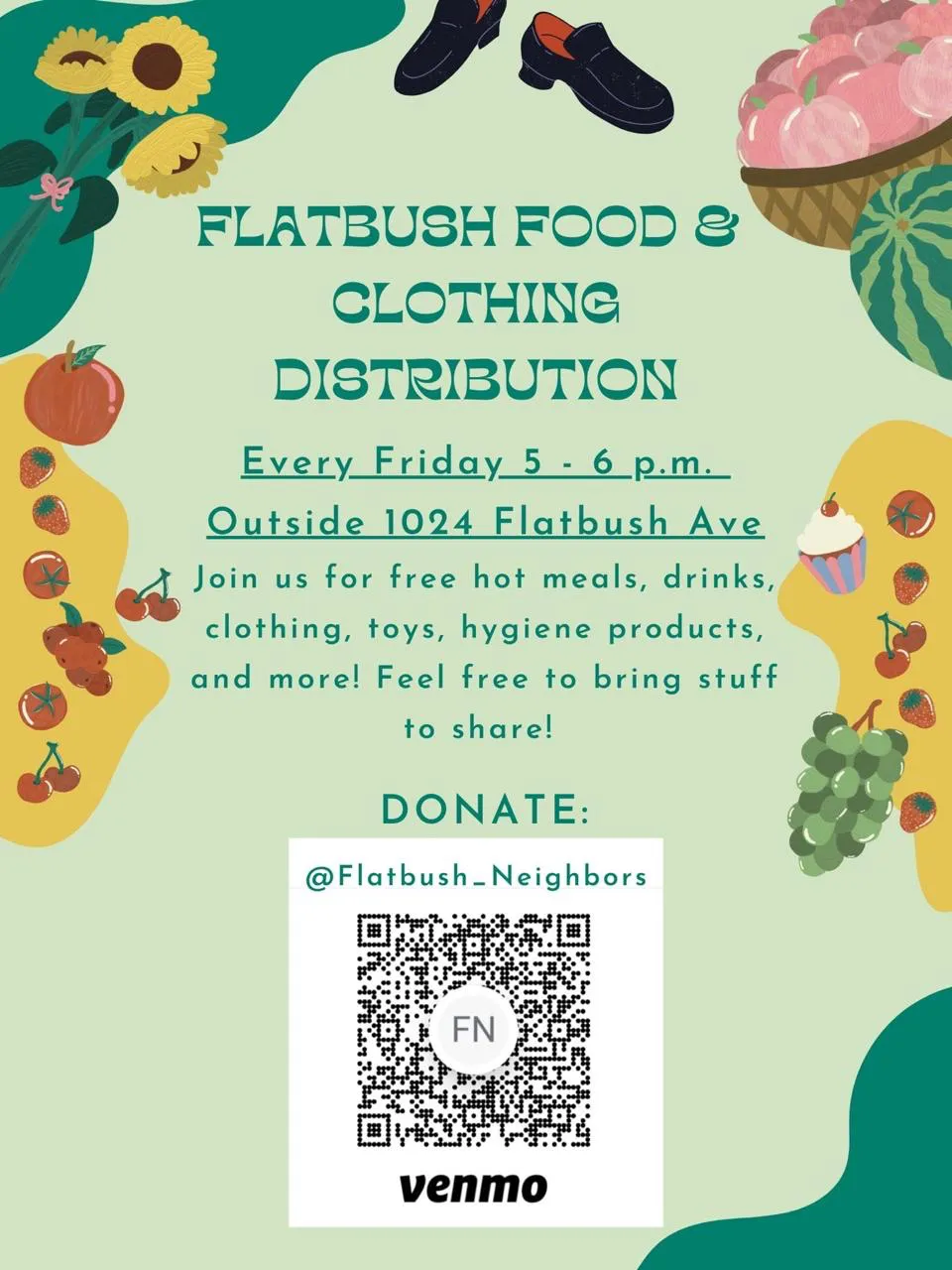
Between this and the biweekly food distro—do I love cleaning up when she drives the 40 meals to the site? Not really, but it's the least I can do—and the donations to the food bank and the pandemic mutual aid and working with the school, we’ve fed what? Thousands of meals, I guess. Hundreds of people. Maybe ten thousand meals over a few years. Bulk bags of chicken breast, crates of broccoli.
That feels nice. Some full bellies. I remember it, getting bags of groceries from the community church. God all you want is Oreos. Lucky if you get grocery brand sugar cookies. Of course, now I take Mounjaro so I don’t want to eat, and to keep my blood sugar within mortal ranges.
We are, and this was our unspoken goal, infrastructure. I’ve never felt like I belong anywhere at all. Nonetheless I think we may be load-bearing. I like being infrastructure: Invisible but useful.

I emailed this to 311, and a year or so later those bikes were gone.
Today she went to a tiny bike shop run by two immigrants to drop something off and it was empty, stripped.
It was, I am sorry to say, the absolute greatest bike shop. In this neighborhood or any.
A NYC-typical shop you go in and they look you up and down and go, Come back in two weeks. Now you have no bicycle. You go back in two weeks. You went in with loose brakes but now they say, We had to replace your frame, it's made of pure moon aluminum, that's all we could get. So it's $6,000. And you have to pay.
But this one, pizzabox chef kissing fingers, it had a Spanish name and served everyone—delivery drivers, the ultra-Orthodox, intensely costumed bike nuts, and trundlers like me. They fixed your brakes in ten minutes for ten dollars, rewiring, and you'd give them $20. Right on the sidewalk. One guy would just run tools to another. Another kind of infrastructure.
It's all guesswork, working backwards from the empty shop, but—obviously they saw where this was headed and cleared out. Odds are they had their bugout bags packed, at least metaphorically. Paid in cash all those years, hopefully a lot went home and got stashed away. And a wonderful thing is taken out of the world. And I’m back to two week bike repairs.
I go there to get my bike fixed—but my wife had gone to drop off some different infrastructural output—little cards and whistles—for the deliveristas and was very sad that it was all gone. Told me all about it. I stretch out on the floor and she talks to me. She is very, very bummed.
I was quiet for a while. My business partner emigrated here as a child; I'd had my piano lesson in the morning—my teacher is Argentinian. Next morning I'll see my Lebanese therapist. Immigrants are essential infrastructure; the city collapses without them in all of its aspects—transit, culture, arts, finance, government, even policing. Our mayor was born in Kampala.
But look, I said, not knowing anything but trying to sort it out, this is a grievous time and it might not get better. We should think about that. Maybe we won't die as Americans. (Which made me sad. I would like to die as an American.)
But…we probably will.
I am trying to update my website, and importing all the things I've written over the years. And I keep finding posts from decades ago. We knew this was here the whole time. We saw it when we invaded Iraq. And I found this thing I posted 22 years ago—“A Chinese View of the Statue of Liberty.” But it’s from 1885. The author wanted to be an attorney, and didn't have the right. I keep listening to a recording of the Bible. I'm trying to figure out what stories we are telling.
I know you're worried I'm getting religious but trust me I am a stone atheist. I regret it but I am. But how different groups can believe the same story and come to these conclusions—you know in Jon Dos Passos's American Trilogy it's about Sacco and Vanzetti and the famous line from it is, “All right we are two nations.” And yet it seems intolerable to us. It breaks our heart. And I want to understand that, but every time I think I do, I can't quite figure it. Maybe it’s in the Bible. Or I should just finish Dos Passos. Both are hard to read.
The carpet is soft and gray. The steam heat is warm. I have a house. I have a refrigerator.
This will seem like a jump but stay with me. When I went on Mounjaro, I felt this immense sense of relief and freedom, and the only narratives that made sense were trans narratives. You take a shot, the hormone changes you who are, it's baffling, but for the first time in your life you see a future where you have some control. When there were shortages I would panic and despair.
We turned the world onto hormones. I did it because my endocrinologist prescribed it. We all lost all this weight. We could have realized just how wonderful it must be to be trans, to understand that the food noise was an analog to gender noise, but we did the opposite. We doubled down on hatred and made it worse. At the moment of maximum potential empathy we mounted a national twinkie defense. We see ourselves in the other person and it enrages us. We are broken entirely.
(I am always running my predictive model. Cynicism has high predictive function. Patriotism has very little. Hope does have some. Empathy has a lot, actually, if you listen to it very carefully. But empathy carefully applied mostly brings bad news.)
I wanted to write about that, about this possible bloom of empathy but I couldn’t find a way that didn’t require the reader to feel empathy for me. And you just can’t ask for that any longer, or I can’t. Empathy is dead from all angles. If you profess it you're a grifter from one side and a mark from another. Everyone has chosen a side, and seekers after common cause are good for target practice, only.
But stretched out on the floor I said, But I think that will pass.
I think it is good to see the real face of this place. It's good for people to look in the mirror and see what we do, the ways we kill people. This is what we are.
Now we have seen it. And most people want to do better. They may not let us, but we do. And so I take a lot of faith and hope in that. We keep finding each other, meeting around tables. [A friend] distributed 30,000 pounds of food in Minneapolis.
I got up and did the dishes, there are always some. Did I say it all exactly thus? No, but in this shape.

From Minnesota Algae, 1910.
I've spent a lot of time in rebuilding this website and making a nice CMS which handles taxonomy. But I wonder if I should have. I can simply paste things to Claude and let it organize and publish them. You don't need software, in some cases. I keep seeing people building applications on top of these tools, but then you could just tell the tool and skip the application.
And yet. I don't think I'd have what I want if I'd just instructed a bunch of agents to chew through gigabytes of files.
Nonetheless. Software is still software but also a substrate now—a thick algae layer above the pond, nutrient-rich but throwing off the ecosystem too. It's out of balance right now. It's choking the fish. You don't have to write any code at all quite often. But you forsake a lot of control when you do not.
As anyone who reads this newsletter, listens to our podcast, or overhears me yelling at strangers on the train knows, I’m excited that tens of millions of people could suddenly become software developers thanks to Claude Code (and its inevitable competitors—there’s a rumored DeepSeek coding tool in the pipeline, which would be chef’s kiss). But I also know that whenever I feel particularly hopeful about technology, I should grab a huge ice bucket and stick my head into it, because enthusiasm often doesn’t translate into social acceptance, utility, or positive outcomes.
Having learned this lesson too many times, I’ve been trying to figure out what I’m not seeing. Four tech-world visions haunt me: The four vibe-coding horsemen of the coming AI software apocalypse. They’re not so much about the social harms, because we actually talk about those a lot. Instead, I’m thinking about the ways that processes could be upended when everyone can produce code.
“We can deploy anywhere.” I wrote about this last week. Over the past decade, deployment has become extremely cheap—what used to cost hundreds of dollars a month now costs pennies—but incredibly complex because everything needs to be secure and backed up and provisioned across multiple clouds. In the effort to simplify everything, we created a whole new discipline, “DevOps,” to make things work. I’m not saying DevOps goes away; I’m saying that it’s a lot easier to deploy anywhere, any time, simply by telling an LLM, “Here’s a root password; see what you can do.” You can go ahead and make every possible rule against this, but then look into your heart and ask yourself: Will engineers continue to fill out forms and write playbooks for deployment, or simply tell a bot to do it?
“Just clone it!” I’ve seen this one up close: People call us and say, “Hey, I pay $100 a month for this very specific commercial real-estate platform—and I hate it.” What comes next is a litany of frustration, followed by a desire for something that works really well, just for them, along with a desire to spend exactly what they’re paying today, but for something custom. Other people have asked: “Can’t we just use AI to clone Quickbooks?” Here’s what’s dangerous: You…can. Oh, maybe not today. But in six months, I will be looking for lots and lots of clones. CRMs for $2 a month? Accounting tools for free built by teams of five? Internal copies of accounting suites? Sure! It’s all on the table. And when you say, “Hey wait, how are we going to maintain that, and make sure it integrates seamlessly with third parties, like, say, Stripe payments?” People are going to just offer that AI will maintain it, too. If you don’t see the problem…well…I’m jealous.
“Framework-first programming.” A good rule of thumb: 80% of engineering time is spent configuring your IDE or code editor; 20% is spent writing code. There’s a whole engineering glossary around these tendencies: Yak shaving, bikeshedding, architecture astronauts. AI enables this in absolutely unimaginable ways: You can create configuration languages that write configuration files. You can port code in one language to another. You can run Linux applications in the browser. You can build frameworks all day long, without ever writing code people use. Things that used to incur vast friction are now easy as pie. This is very, very good and will lead to absolutely nothing ever shipping.
“Salesforce mobile gaming.” That isn’t a real thing, at least not yet, but people are going to realize they can ship just about anything, and are going to start slipping outside of the bounds of good sense, taste, or logic. Salesforce could decide to gamify CRM. Epic Games could decide to build a CRM that runs inside of Fortnite. Facebook could decide to make its own Google Docs, so that you can share docs on Marketplace—or Google could decide to embed a social network into Google Docs comments. These companies have had the ability to ship any software they wanted for some time, but it’s always been expensive, and hard to get the extra humans you needed. Now you might find yourself in a different position: Forced to justify your headcount, and capable of shipping tons of product in record time.
That’s just four—and there are many more to come. I’d love to hear yours. I should also say that I have very mixed feelings about the “democratization” of publishing over the last few years, and the way it led to consolidation within a very few media platforms. I have a deep distrust of AI around content generation. But the fundamental “deal” of the software industry has always been that technology can shift under your feet, and you have to work it out.
[Quoted post]➛

How is one of the internet’s biggest spaces for human creativity adapting in the AI era? On this week’s podcast, Paul and Rich are joined in the studio by Rafe Colburn, the Chief Product and Technology Officer at Etsy. After discussing Rafe’s long history at the company, they tackle the AI topic two ways: First, how the Etsy engineering org is using AI tools, and second, Etsy’s recent deal with OpenAI to display their products directly in ChatGPT searches. Plus: Rafe and Paul teach Rich the proper term for those little charms you stick in the holes of your Crocs.
[Quoted post]➛
Welcome to 2026! It’s going to be an eventful year, and there’s nothing to be done about that. I know some of us were hoping AI would go away over the break, but it’s here to stay. I have spent the past couple of months going deep on Claude Code, and I want to share some very high-level observations.
“Going deep” sounds intense, but actually involves typing a chat message into your phone and then coming back to it 20 minutes later to see if it worked, over and over again. You can finally write complex software on the bus. (And if Mayor Mamdani gets his way, that bus will be fast and free.)
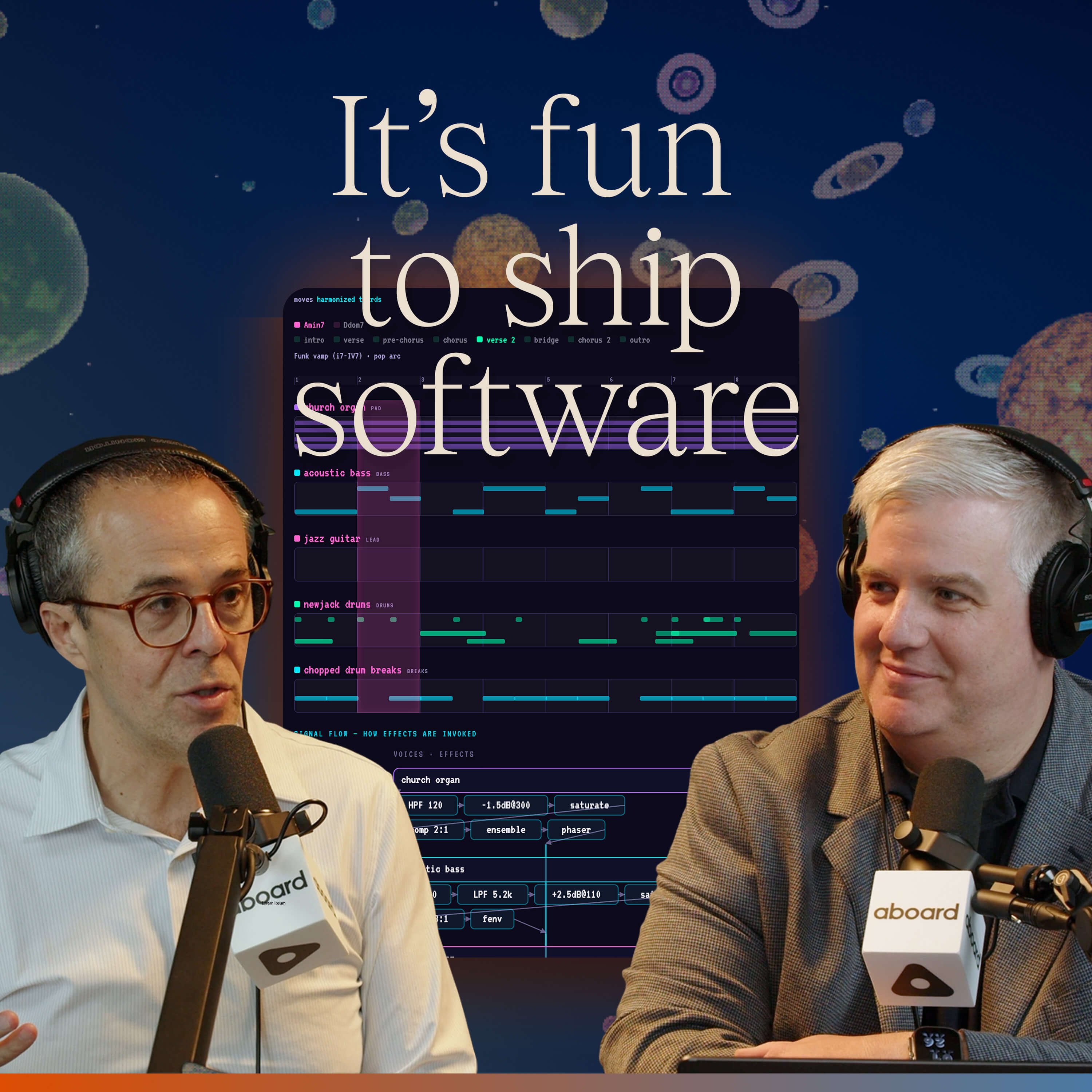
Just so you know I’m not a fraud, I’ll share my very broken work-in-progress: A digital audio workstation that runs in the browser on iOS Safari or on Chrome on the desktop. It’s extremely buggy, and uses technologies that I do not understand one bit. It may not even make sound for you (it does for me). I’m consciously trying to code something where I don’t understand the ingredients, but can judge the output, like one of the more annoying guests on Top Chef.
That said, I built the workstation in such a way that I can say, “Use our open-source component library to clone a Prophet 5 synth by getting the manual from Archive.org and add that,” and it will do it in about five minutes and sound pretty good. Whole new frontiers of intellectual property challenges await us!
A huge amount of the discourse about vibe coding has to do with “one-shotting”: Describing your application in a set of bullet points, walking away, and coming back to find that an army of agents has done the work that used to take weeks, months, or years. You tweak it, and you’re golden. This approach was well-visualized in the classic Disney short “The Sorcerer’s Apprentice.”
For a few weeks, I kept trying to one-shot big chunks of this thing, but over time, I realized that’s not the right approach. As I explore this new way of working, I keep murmuring the three “A”s: Aim, Architecture, and Accountability. This isn’t just more of my business-speak nonsense. I really need to remind myself, every five minutes, of the three As.
Aim. It’s incredibly easy to lose sight of what matters. I spent eight hours trying to get a clone of a synth from 1983 that I don’t even like running in the browser. I went to sleep frustrated at 2 A.M. I also utterly neglected practicing real piano while I was trying to synthesize a piano; my piano teacher has sent me back to Bach as a punishment.
Code has its own gravity. It’s hard to see it as disposable, just like it’s hard to erase paragraphs you’ve written when editing. The cost of building the wrong thing is so low that you need to constantly say, “Wait, do I even want this?”
Architecture. This is a tough one. I think people are being sold AI as a massive miracle, but when you get it home and open the box, it turns out to be little miracles mixed in with spare coins and old socks, and you have to sort through it.
If you want to build sustainable software, you must fully understand and manage its architecture: What kinds of components to use, where it’s supposed to run, the kinds of state you manage, how data is represented. Architecture is deeper than “stack”—it’s about the way data flows through a system. A good decision can yield infinite flexibility; a bad one can yield endless pain.
A shocking number of architectural decisions are not purely technical, but come down to taste—because they drive the experience of the end product. For example, I could not get Claude to generate UX for my synths that made the least bit of sense until I completely stripped everything down to raw data, got rid of all styles and widgets, and started from pure JSON, then slowly built up a UX from the actual state of a “song” in the system, slider by slider.
By doing that, I also have a version of a “song” that I could save and restore, and mechanisms for undo/redo. Yes, Claude helped me code all of that—but only after I took a huge step back and thought about where every single note and synth and sample came from, and how they would be represented. Once you lock in on your data flow, you’re off to the races. You can start to just tell the bot to extend the system, and because your architecture is the baseline, your confidence that it will do the right thing will go up, not down.
That’s the good news. The bad news is that this is still programming, even if it’s a lot faster. There were countless points over the past few weeks when I had to draw on 30 years of experience and a solid understanding of how data flows through audio systems in order to make progress. At one point, I read C++ code to understand how the Yamaha DX7 synthesizer packed its voice information into 156 byte arrays, an absolutely terrible thing to learn.
My argument isn’t that AI won’t be able to help with this stuff in the future. But AI is your general contractor, and you are the architect. Are you building a Burger King in Peoria or an art museum in Los Angeles? Both have extremely different goals about function, throughput, ingress, egress, and fire safety—it’s on you to make those decisions, because while AI can simulate intent, it doesn’t actually possess it.
Accountability. The little synths I’m making run only in the browser with no backend. They’re purely read-only. This is by choice: I don’t even have analytics or know who’s visiting. Pure GDPR compliance out of the box.
Most web applications, however, have a lot of data, often about individuals. To manage those apps, there are hosting companies like Vercel or even Amazon AWS, which used to promise simplicity over managing your own servers, but now are absolutely incomprehensible.
I’m working on a different app on the side of this side project and wanted to host it, but after reading a bunch of hosting provider docs and getting cryptic error messages, I told Claude, “Here’s a server with root access. Start deploying everything there.” And my God, it did all the hateful stuff: Configuring the web server, setting up the https/SSL connections, just hours of the worst work being sent to work heaven. Paradise.
This is for a personal project, and I have total control, so it’s fine. But while I was doing it, I had a panic attack. Imagine a developer for your company doing this. Everything is set up and running and working. You, the boss, are so excited! You forget to ask about the long-term management of the project and where the keys will be kept. Obviously they used your existing system, right?
Now they quit, and the server crashes two weeks later. How do you log into it? Where is it hosted? How is it managed? Who has root access? Where are the backups? AI won’t help you now. You’re screwed.
It’s about to become very, very easy to circumvent all kinds of systems and processes in the interest of ease, to just skip a bunch of steps and hack something together to make your boss happy, so you can get back to playing games on your phone. This has always been a profound danger and there are countless approaches to managing it, but there’s also just a natural amount of friction built into coding and deploying, and everyone tends to follow the rules because other kinds of friction are worse. These stakes will get a lot higher—as will the stakes around privacy, accessibility, and all kinds of compliance, because it’s going to be so easy to do a half-assed job and call it a day. Accountability!
Anyway, I’ve got a ton to do on my DAW, but plenty of time to do it. It’s a good learning project, and I finally have a solid understanding of some of the uglier corners of the web platform, things like WebAssembly, WASI, and the AudioWorklets. It’s ironic, but I’ve learned more about web coding in the last two months than in the last five years. When I’m done with my project, I’ll either keep it around or throw it away.
I would point out though, when I looked at my GitHub logs, it wasn’t a one-shot project. I’ve taken 1,000 turns to get it to this state. How many turns remain? Another thousand? Twenty times that? I don’t know. My guess is I’ll never be done. That’s just how this goes.